How to Match a Diesel Generator to Your Essential Equipment Loads
Understanding the Real Load Before You Choose
Selecting a diesel generator for essential equipment is not as simple as adding up nameplate ratings. Most machines draw significantly more current when they start than when they run steadily, and a generator that handles the running load may still trip its breaker the moment a motor kicks in. The first step is to separate your equipment into categories: continuous loads such as lighting, control panels, and refrigeration, and intermittent loads that cycle on and off, especially motors and compressors. Write down the rated output in watts or amps for each item, but treat those numbers as a starting point, not the final answer.
Once you have a list, identify which equipment is truly essential during an outage or off-grid operation. A workshop might need a compressor, a few lights, and a battery charger, while a small facility may also require a sump pump or a ventilation fan. Anything that is not critical should be left off the generator to keep the sizing reasonable and fuel consumption under control. This selection step directly affects the generator class you will need and the cost of the whole setup. A well-known source for comparing different industrial generators and their load ratings is epowerhousellc.com, which lists a range of units suited for continuous and standby service.
Starting Current versus Running Current
The biggest mistake in generator sizing is using only the running wattage. Electric motors, especially those in compressors, pumps, and conveyors, can draw three to seven times their running current for a fraction of a second when they start. This inrush, often called locked-rotor current, is what the generator must deliver or the voltage will dip enough to stall the motor or damage sensitive electronics. If you are powering a single large motor, the generator must be sized for that starting surge. If you are powering several motors that start at different times, you can size for the largest starting load plus the running loads of everything else.
To handle starting current reliably, look at the generator's surge capacity, which is usually listed as a percentage above the continuous rating. A generator rated for 20 kW continuous might handle 25 kW or more for a few seconds. Compare that with the combined starting demand of your largest motor plus the running load of all other equipment running at the same time. If the numbers are close, it is safer to step up to the next larger unit. Undersizing leads to voltage flicker, overheating, and premature wear on both the generator and the equipment.
Fuel Consumption and Runtime Planning
Diesel generators are valued for their fuel efficiency and long service intervals, but the fuel burn changes with load. A generator running at 30 percent load uses nearly as much fuel per kilowatt-hour as one running at 80 percent load, so oversizing wastes diesel and shortens engine life through wet stacking, a condition where unburned fuel accumulates in the exhaust. The ideal operating band is between 60 and 80 percent of the generator's continuous rating. That is where combustion is cleanest and maintenance intervals stretch furthest.
To estimate runtime on a tank, you need the generator's specific fuel consumption at the expected load, usually given in gallons per hour or liters per hour in the manufacturer's data sheet. Multiply by the tank capacity and subtract a reserve of about 15 percent to avoid running the tank dry, which can introduce air into the fuel system and require bleeding. For extended runtime, consider an automatic transfer switch with a sub-base fuel tank or a connection to a bulk storage tank. The transfer switch also lets the generator start automatically when the mains fail, which is essential for unattended operation.
Load Bank Testing and Voltage Regulation
After you have selected a generator size, you should verify that it can hold stable voltage and frequency under the actual load. A load bank test applies a known electrical load to the generator and measures its response. This test reveals problems with the governor, the voltage regulator, or the alternator windings before the generator is connected to your equipment. It is standard practice for commissioning a new unit and for annual maintenance. If you are buying used equipment, a load bank test is the only way to confirm that the generator can deliver its rated output.
Voltage regulation is especially important when the generator powers sensitive electronics such as PLCs, variable frequency drives, or computer equipment. A generator with poor regulation may allow voltage to swing 10 percent or more when a large motor starts, which can cause control boards to fail or drives to trip off-line. Modern industrial generators often include a digital voltage regulator or a permanent magnet alternator that holds output within a tighter band. Check the spec for steady-state voltage regulation and transient response. If the regulation is not listed, ask for the data or test it with a recording meter during a load bank run.
Power Distribution and Connection Points
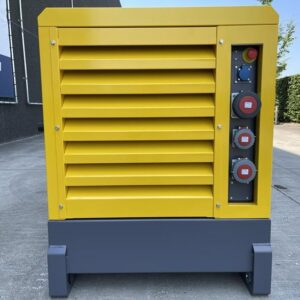
A generator is only useful if the power can reach the equipment safely. The connection point is usually a manual or automatic transfer switch that isolates the generator from the utility grid. Never connect a generator directly to a building's panel without a transfer switch; backfeeding can energize dead utility lines and kill a lineworker. The transfer switch must be rated for the generator's full output and for the interrupt rating of the incoming service. For portable generators, a power distribution box with twist-lock receptacles and individual breakers for each circuit gives you flexibility and overcurrent protection.
Plan the cable runs with voltage drop in mind. Long cables from the generator to the equipment increase resistance and reduce the voltage available at the load. For a 240-volt circuit, a drop of more than 3 percent can cause motors to run hot and lights to dim. Use the manufacturer's cable sizing table or a voltage drop calculator to choose the correct gauge. Keep the generator as close to the load as practical, but follow the clearance requirements for exhaust, cooling air, and fuel storage. Indoors, a diesel generator requires a dedicated ventilation system to remove heat and exhaust gases.
Maintenance Considerations That Affect Sizing
Diesel generators that run infrequently need a different maintenance schedule than those that run daily. Infrequent use can lead to fuel degradation, battery sulfation, and stuck valves. A generator that is expected to sit for months should have a fuel stabilizer, a weekly exercise cycle under load, and a battery charger that keeps the starting battery full without overcharging. Exercise under load is critical; running the generator with no load for a few minutes does not warm it enough to burn off moisture and varnish. A load bank or a set of resistive heaters can provide the necessary load during exercise.
When you size the generator, factor in the maintenance access. A unit that is too large for the space may be difficult to service. Oil changes, filter replacements, and coolant checks should be possible without disassembling the enclosure. If the generator has a sound-attenuating canopy, confirm that the service panels open fully and that the drain valves are reachable. These practical details affect long-term reliability more than any spec on the data sheet. For a broad selection of industrial generators that balance size, output, and serviceability, you can browse listings at epowerhousellc.com to compare models side by side.
Putting the Numbers Together
To summarize the sizing process in a practical order: first, list every essential load with its running and starting watts. Second, add the starting load of the largest motor to the running load of everything else. Third, pick a generator whose continuous rating is at least that total and whose surge rating covers the starting peak. Fourth, verify that the generator's fuel consumption at the expected load matches your runtime needs. Fifth, plan the connection with a transfer switch and proper cable sizing. Sixth, schedule a load bank test before putting the generator into service. Following these steps will give you a reliable power source that starts every time and runs efficiently without damaging the equipment it serves.